Literary appearance
Isabella’s pot of basil
Basil holds grief and attachment in a poem by John Keats.
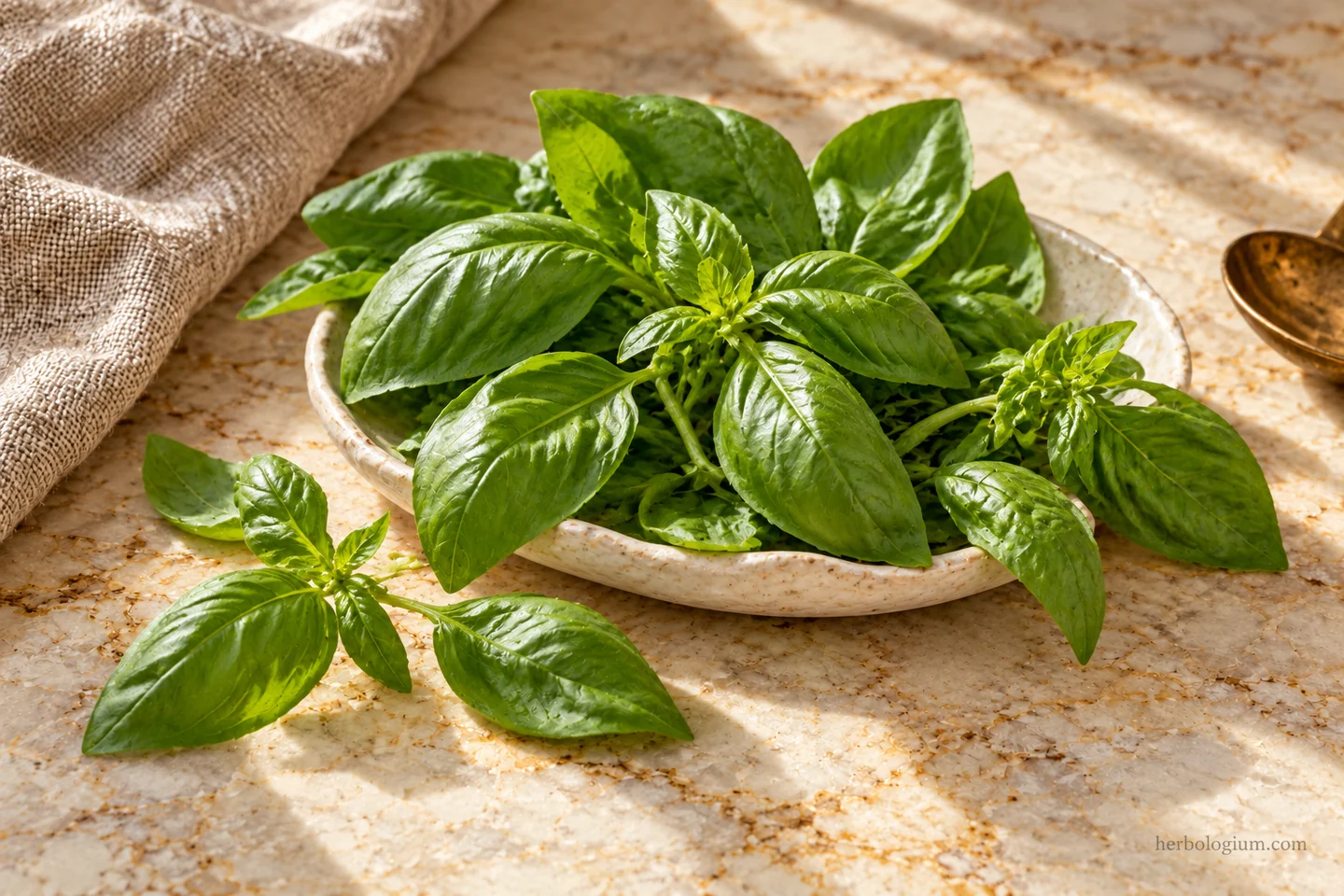
Basil — imagined ingredient study · OpenAI image generation · Herbologium art direction · AI-generated decorative artwork. Original AI-generated ingredient illustration, made for Herbologium with Taj Mahal quartzite, flax linen and soft natural-light styling. Not a photograph, botanical identification guide, or documentation of a historical custom. The domain mark identifies the collection; no human photographer is claimed. No blanket reuse license is stated. Source: https://herbologium.com/botanical-illustrations.json
THE STORY
In Isabella; or, The Pot of Basil, the grieving Isabella tends basil planted above the remains of her murdered lover. The plant becomes the focus of her care and loss. Stanzas LII–LIV describe the pot; later stanzas recount its removal.1
“Sweet Basil, which her tears kept ever wet.”
John Keats wrote the poem, published in 1820. This reading uses M. Robertson’s 1909 edition, available through Project Gutenberg.1
The poem names Florence as its setting and identifies itself as a story from Boccaccio. A literary setting is not evidence that a community practiced the actions in the story.1
Reading this account
The plant’s role is interpreted here as an expression of attachment and grief. Reading it alongside the September basil account reveals different meanings without assuming a shared origin.1
What the source leaves open. The poem concerns murder and bereavement. Its botanical imagery is literary, not evidence of a living practice.
KEEP THE FOOTNOTES
Sources behind the story
- Isabella; or, The Pot of Basil, in Poems Published in 1820
Clarendon Press edition, digitized by Project Gutenberg (eBook 23684). Stanzas LII–LIV and LX–LXIII; original poem published in 1820. Consulted October 17, 2026.
Source-based reading · Sources consulted October 17, 2026.
Something to add or correct? Leave a note for the collection.
Your notes on this story
A connection, a question, a passage to return to. Private to this browser.