THE BIOLOGY NOTEBOOK · 02
One sugar, one enzyme, many experiences
A closer look at lactose, lactase, and what inheritance can—and cannot—explain.
keep the question specific
Source-based reading · Collection updated October 25, 2026
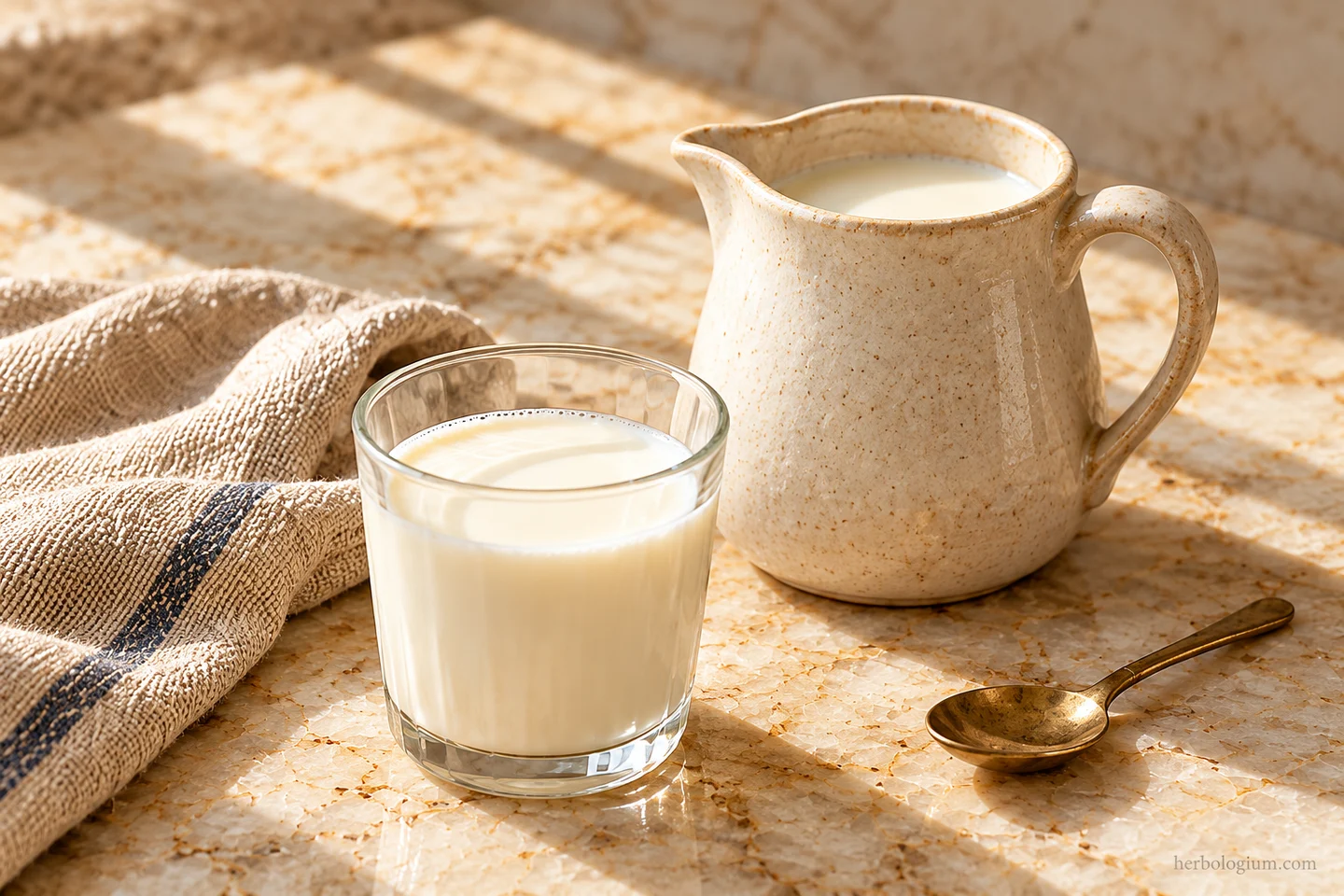
Milk and lactase reading — imagined food study · OpenAI image generation · Herbologium art direction. Original AI-generated editorial food illustration, made for Herbologium with Taj Mahal quartzite, flax linen and soft natural-light styling. Not a photograph of a real serving, a scientific diagram, or documentation of the food used in a study. The domain mark identifies the collection; no human photographer is claimed. No blanket reuse license is stated. Source: https://herbologium.com/body-illustrations.json
01 / FOLLOW THE QUESTION
What happens to lactose?
Follow one sugar through a simplified digestive process, from the small intestine to absorption.
STEP 01
Start with the sugar
Milk contains lactose. Its digestion involves lactase, an enzyme working at the surface of cells lining the small intestine.
Behind this stepRead all three steps
Start with the sugar
Milk contains lactose. Its digestion involves lactase, an enzyme working at the surface of cells lining the small intestine.
Source for this stepOne sugar becomes two
Lactase helps split lactose into glucose and galactose. The diagram places the enzyme above the arrow because it helps the reaction happen.
Source for this stepFollow the smaller sugars
Glucose and galactose can be absorbed. Lactose that remains undigested can reach the colon, where bacteria and fluid contribute to digestive symptoms.
Source for this step
The complete explanation
Start with the sugar
Milk contains lactose. Its digestion involves lactase, an enzyme working at the surface of cells lining the small intestine.
One sugar becomes two
Lactase helps split lactose into glucose and galactose. The diagram places the enzyme above the arrow because it helps the reaction happen.
Follow the smaller sugars
Glucose and galactose can be absorbed. Lactose that remains undigested can reach the colon, where bacteria and fluid contribute to digestive symptoms.
References are listed under “Behind the explanation.”
02 / READ A LITTLE CLOSER
What lactase does
Lactose is a sugar in milk. In the small intestine, the enzyme lactase breaks it into smaller sugars. When some lactose reaches the colon undigested, bacterial activity and fluid can contribute to symptoms such as bloating or diarrhea.
Where inheritance enters
Lactase production decreases after infancy for many people. Some inherited regulatory variants help maintain production into adulthood. This is a specific relationship between genes and a digestive process.
More than a genetic label
Reduced absorption and noticeable symptoms are not identical. Amounts consumed and individual circumstances matter. Small-intestine injury can also reduce lactase activity. Milk allergy involves a different process, and an ancestry estimate cannot diagnose the cause of symptoms.
The useful distinction
A finding about one sugar and one enzyme does not supply rules for an entire diet. Understanding the relationship means keeping the food, amount, digestive process, and person's experience in view.
A QUESTION FOR YOUR OWN NOTEBOOK
What will you keep thinking about?
What would you like to understand better about the difference between a mechanism and an experience?
Your notes on this reading
A question, a distinction, a source to return to. Private to this browser.
03 / KEEP THE FOOTNOTES
Behind the explanation.
Original studies and reference material, with their scope kept intact. Source publication dates and consultation dates are shown separately.
- 01
Symptoms and causes of lactose intolerance
National Institute of Diabetes and Digestive and Kidney Diseases · 2018 (last reviewed February)
Clinical explanation of lactase, malabsorption, and symptoms.
https://www.niddk.nih.gov/health-information/digestive-diseases/lactose-intolerance/symptoms-causes - 02
Lactose intolerance
MedlinePlus Genetics · 2023 (updated March 24)
Genetic and biological context.
https://medlineplus.gov/genetics/condition/lactose-intolerance/ - 03
LCT gene
MedlinePlus Genetics · 2023 (updated March 24)
Lactase at the small-intestine brush border, and the breakdown of lactose into glucose and galactose. Used for a simplified conceptual diagram, not a molecular or anatomical model.
https://medlineplus.gov/genetics/gene/lct/
Something to add or correct? Prepare a note for this reading.