Start with something ordinary
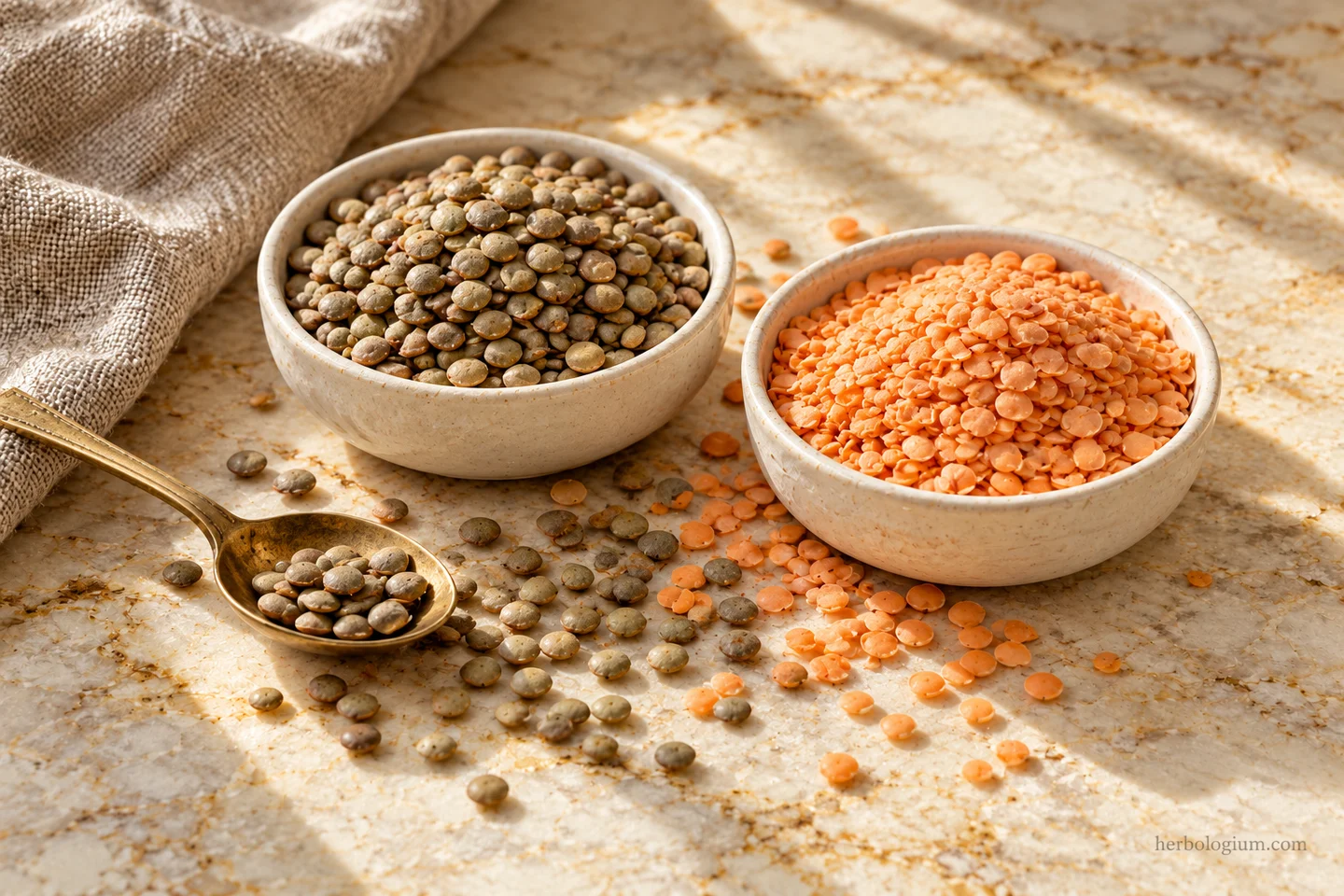
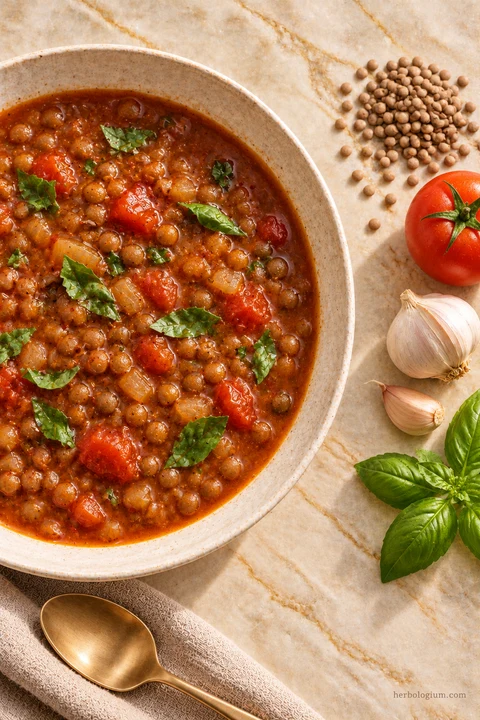
A pot of lentils can open several doors. There is the plant itself, the way it is prepared, the people who taught the cook, and the questions biology can ask. This collection moves between those doors without requiring them to tell the same story.
A place for your own questions
Which ingredient did a household substitute after moving? Which measurement was understood but never written down? What was grown, bought, preserved, or shared? The collection is an invitation to ask these questions, not a claim to possess your family's answers.
Follow the cards
Begin with the lentil profile and recipe. Then consider a specifically recorded family custom, before reading what ancestry can and cannot establish about food. Each card keeps its own sources and context.
KEEP THE FOOTNOTES
Sources & further reading
Snir, A., Nadel, D., Groman-Yaroslavski, I., Melamed, Y., Sternberg, M., Bar-Yosef, O., & Weiss, E. · 2015
PLOS ONE, 10(7), e0131422. Ohalo II, on the southwestern shore of the Sea of Galilee, dates to about 23,000 years ago. Its plant assemblage includes wild progenitors of lentil. The paper's argument for experimental cultivation concerns cereals; it does not establish lentil cultivation. Exact site coordinates were not verified for the map.
Kabukcu, Ceren · 2023
Vegetation History and Archaeobotany, 32, 533–543. Early Pre-Pottery Neolithic B samples date to 10,500–10,300 calibrated years BP, approximately 8550–8350 BCE. Carbon-isotope differences in a small sample of morphologically wild lentils may reflect cultivation or gathering from different habitats. Domestication is not demonstrated. The map coordinate is independently sourced from lentilGusirLocation.
Caracuta, V., Vardi, J., Paz, Y., & Boaretto, E. · 2017
PLOS ONE, 12(5), e0177859. Ahihud, in the Bet ha-Kerem valley of Lower Galilee, has stored legumes including lentils identified as Lens sp. A broad range of individual calibrated dates is about 10,250–9900 cal BP, approximately 8300–7950 BCE; it is not a single exact occupation year. The authors interpret the assemblage as early legume farming. The remains do not by themselves establish species-level identification, a domesticated seed form, a trade route, or a recipe. Exact archaeological site coordinates were not verified for the map.
Something to add or correct? Prepare a note for the collection.
Your notes on this card
What worked, what you changed, what you want to remember. Private to this browser.