THE BIOLOGY NOTEBOOK · 04
Read the claim. Follow the evidence.
A small reading practice: name the claim, find the comparison, and keep the outcome in view.
the footnote belongs here
Source-based reading · Collection updated October 25, 2026
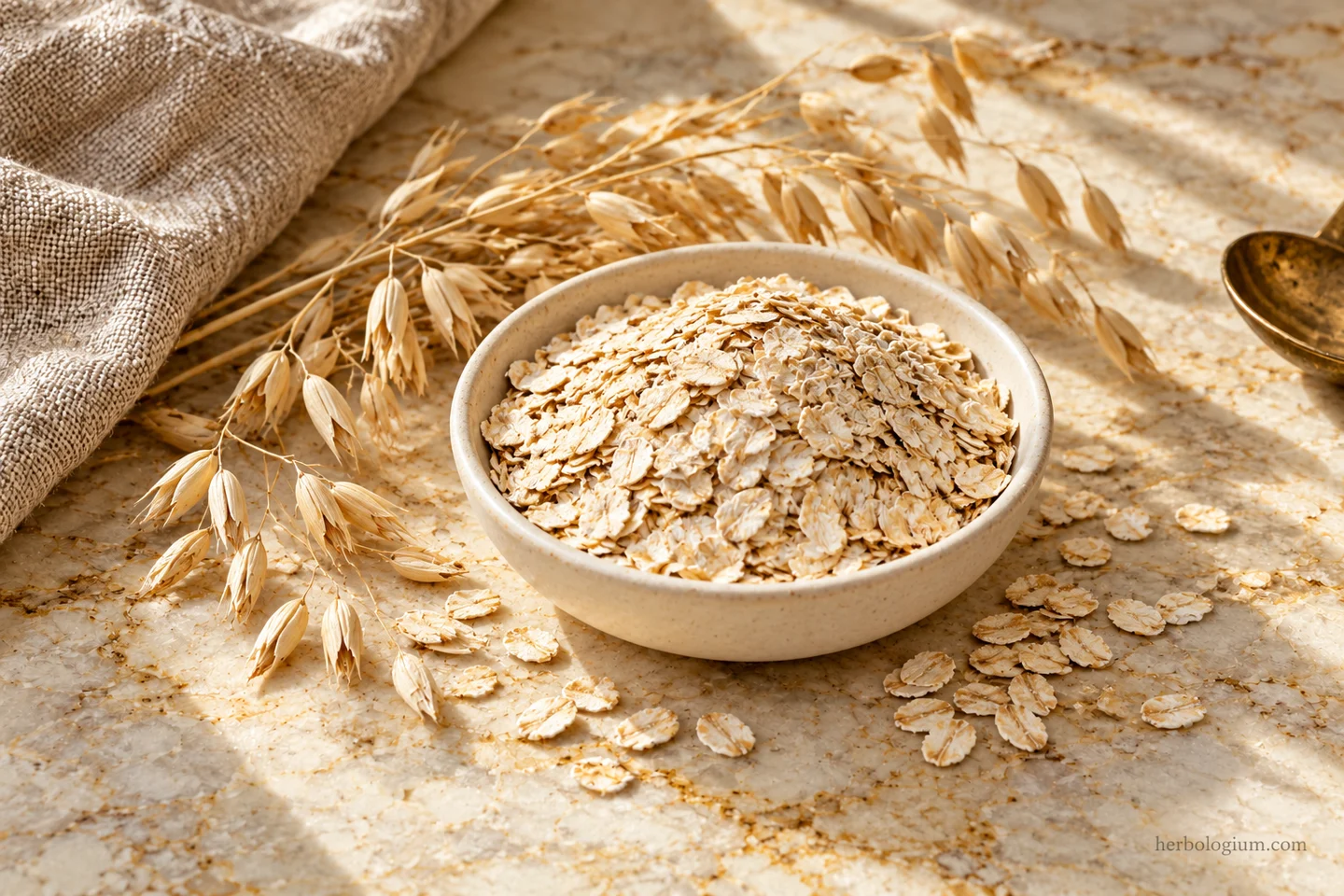
Oats — imagined ingredient study · OpenAI image generation · Herbologium art direction. Original AI-generated ingredient illustration, made for Herbologium with Taj Mahal quartzite, flax linen and soft natural-light styling. Not a photograph, botanical identification guide, or documentation of a historical custom. The domain mark identifies the collection; no human photographer is claimed. No blanket reuse license is stated. Source: https://herbologium.com/botanical-illustrations.json
01 / FOLLOW THE QUESTION
How do you follow a claim back to evidence?
Use these questions with a label, a headline, or a paper. Each asks you to make the statement more specific.
STEP 01
What is actually being said?
A nutrient amount, an association and an intervention result are different statements. Write down the claim before deciding what would support it.
Behind this stepRead all three steps
What is actually being said?
A nutrient amount, an association and an intervention result are different statements. Write down the claim before deciding what would support it.
Source for this stepCompared with what?
For a trial, identify the control condition. A change from baseline by itself does not establish what caused it. Keep the actual comparison beside the finding.
Source for this stepWhat did the study measure?
Look for the participants, duration, measured result and remaining uncertainty. A result about a laboratory marker needs that context when it becomes a headline.
Source for this step
The complete explanation
What is actually being said?
A nutrient amount, an association and an intervention result are different statements. Write down the claim before deciding what would support it.
Compared with what?
For a trial, identify the control condition. A change from baseline by itself does not establish what caused it. Keep the actual comparison beside the finding.
What did the study measure?
Look for the participants, duration, measured result and remaining uncertainty. A result about a laboratory marker needs that context when it becomes a headline.
References are listed under “Behind the explanation.”
02 / READ A LITTLE CLOSER
Start with the sentence
A nutrient amount, an observed association, a laboratory mechanism, and an effect measured in people are different kinds of statements. Identify what the claim says before deciding what evidence it needs.
Make the comparison fair
For a packaged food, begin with serving size and servings per container. The label's serving describes a typical consumption amount, not a personal eating instruction. Compare equivalent quantities when comparing products.
Ask about the study
In a controlled trial, an intervention is compared with a control condition. A change from a person's starting point alone does not explain its cause. Ask what was measured, in whom, against what comparison, and for how long.
Keep the outcome in view
A laboratory marker and an improvement in everyday health are different outcomes. Useful explanatory writing keeps those boundaries visible and gives readers a route back to the source.
A QUESTION FOR YOUR OWN NOTEBOOK
What will you keep thinking about?
Save a claim you encountered. What comparison or outcome would you need to find before repeating it?
Your notes on this reading
A question, a distinction, a source to return to. Private to this browser.
03 / KEEP THE FOOTNOTES
Behind the explanation.
Original studies and reference material, with their scope kept intact. Source publication dates and consultation dates are shown separately.
- 01
How to understand and use the Nutrition Facts label
U.S. Food and Drug Administration · n.d.
Serving sizes and Daily Values are label interpretation tools, not individualized advice.
https://www.fda.gov/food/nutrition-facts-label/how-understand-and-use-nutrition-facts-label - 02
Design of the study
National Center for Complementary and Integrative Health · n.d.
Guide to interpreting scientific study designs.
https://www.nccih.nih.gov/health/know-science/how-to-make-sense-of-a-scientific-journal-article/methods/design-of-the-study
Something to add or correct? Prepare a note for this reading.