Zaatar
Seasonings
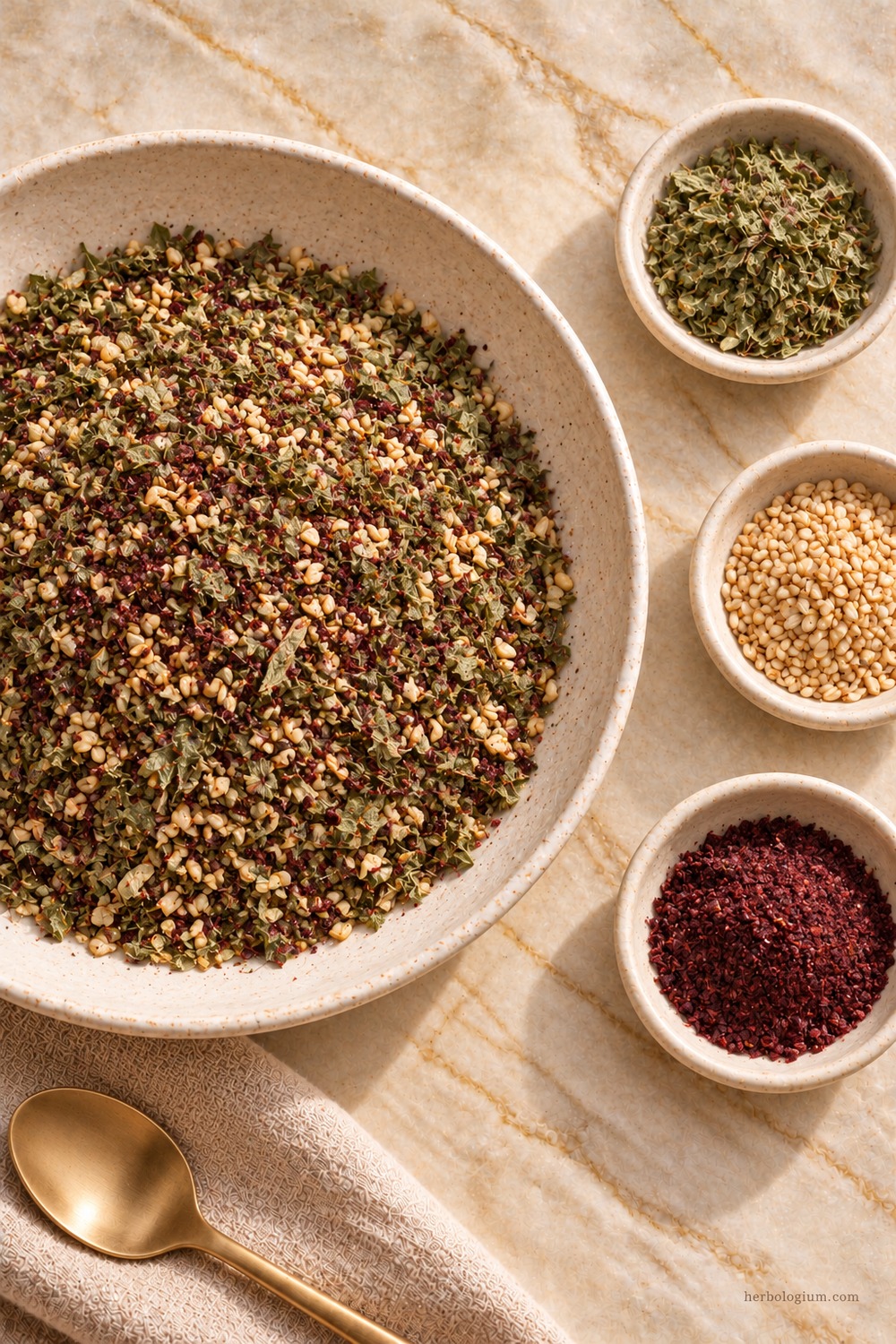
Wael Karram’s Palestinian-Lebanese zaatar blend combines dried zaatar leaves, sesame and sumac.
Time not stated by source · Yield not stated by source
Reported source details; omitted times or yields remain unreported.Recipe source: Wael Karram · Public Domain Recipes
Not independently kitchen-tested by Herbologium.

AI-generated illustration: OpenAI image generation · Herbologium art direction. Zaatar — AI-generated serving illustration. https://herbologium.com/recipe-illustrations.json · AI-generated illustration; no blanket reuse license stated · AI-generated food scene refined to use Taj Mahal quartzite, flax linen and brushed brass, with a small visible herbologium.com mark. Separate portrait and landscape compositions; responsive sizes and JPEG/WebP encoding with embedded AI provenance.
Gather
- 1 cup zaatar leaves (without the stalks), cleaned and dried.
- 1 cup sesame (optionally roasted).
- 1 cup sumac.
- 1 teaspoon salt.
- citric acid salt (optional), for extra kick if the sumac wasn't enough for you
No botanical species link is assigned to this preparation yet. Common ingredient names alone do not identify a species.
Make
- 01
Lightly roast the sesame in a wide pan until it get a golden brown color.
- 02
Wait for the sesame to completely cool down.
- 03
Mix everything together, starting from the zaatar and sesame while adjusting the sumac (optionally citric acid) and salt to taste.
- 04
Store in an airtight jar or container.
Wael Karram · Public Domain Recipes · Zaatar. Public-domain dedication / Unlicense. Editorially checked for ingredient/method consistency. Not independently kitchen-tested by Herbologium. Source-reported and editorially estimated times are labeled separately.
Keep what you learn
Your kitchen notes
Cooking dates, substitutions, and things to try next time. Kept privately in this browser.
FROM THE STOVE TO THE BOX
Your times at the table.
A date, a substitution, a small discovery to bring to the next meal.
Opening your cooking notes…
Your notes on this card
What worked, what you changed, what you want to remember. Private to this browser.
Food & place
Follow this recipe into the Atlas.
- Source recipe version
The pinned contributor’s title, categories or explicit introduction supports this source-version connection. It does not establish an invention, historical origin or a universal national preparation.
Why this connection?
FOLLOW AN INGREDIENT
From the pot to the collection.
Meet the plants
Places in the pantry
Accounts in our Atlas that share these ingredients.
Explore the Atlas →Bring a plant to the study table →THE THINGS WE PASS ON
Keep this recipe in a booklet.
Gather public recipes, regional folios and your family cards into a collection to print. Keep the original words, scans, names and stories together; add cooking notes when you want them.
Begin with a sourced public recipe or regional folio, or add your own family recipes and stories.
Keep the source beside the recipe
Sources & presentation
Collection updated: October 24, 2026
Wael Karram · Public Domain Recipes. (2022). Zaatar.
https://publicdomainrecipes.com/zaatar/
Reviewed version: https://github.com/ronaldl29/public-domain-recipes/blob/134e22f11e4d14e66ee587b1dd3a266e5646d387/content/zaatar.md
Public-domain dedication / Unlicense · https://github.com/ronaldl29/public-domain-recipes/blob/134e22f11e4d14e66ee587b1dd3a266e5646d387/LICENSE.md
Changes: Ingredients and method adapted from the pinned source; Markdown links removed. Original introduction and photographs omitted. Herbologium supplies contextual copy and ingredient links; fixed quantities and actual source author retained.
Editorially checked for ingredient/method consistency. Not independently kitchen-tested by Herbologium. Source-reported and editorially estimated times are labeled separately.
KEEP THE MAKER
Wael Karram · Public Domain Recipes · 2022
Public-domain dedication / Unlicense
Editorially checked for ingredient/method consistency. Not independently kitchen-tested by Herbologium. Source-reported and editorially estimated times are labeled separately.
What changed in this presentation?
Ingredients and method adapted from the pinned source; Markdown links removed. Original introduction and photographs omitted. Herbologium supplies contextual copy and ingredient links; fixed quantities and actual source author retained.
About this recipe and its connections
The recipe and its preparation
Wael Karram’s Palestinian-Lebanese zaatar blend combines dried zaatar leaves, sesame and sumac.
Editorially checked for ingredient/method consistency. Not independently kitchen-tested by Herbologium. Source-reported and editorially estimated times are labeled separately.
Wael Karram · Public Domain RecipesA thread to follow
Follow the named ingredients into the Herbarium and the separately sourced geographical connections below. These selected versions do not represent every household or establish an origin.
Something to add or correct? Prepare a note for the collection.