Museum object
Gingerbread, pressed into a story
A lamb carved into pear wood gives festive baking a shape.
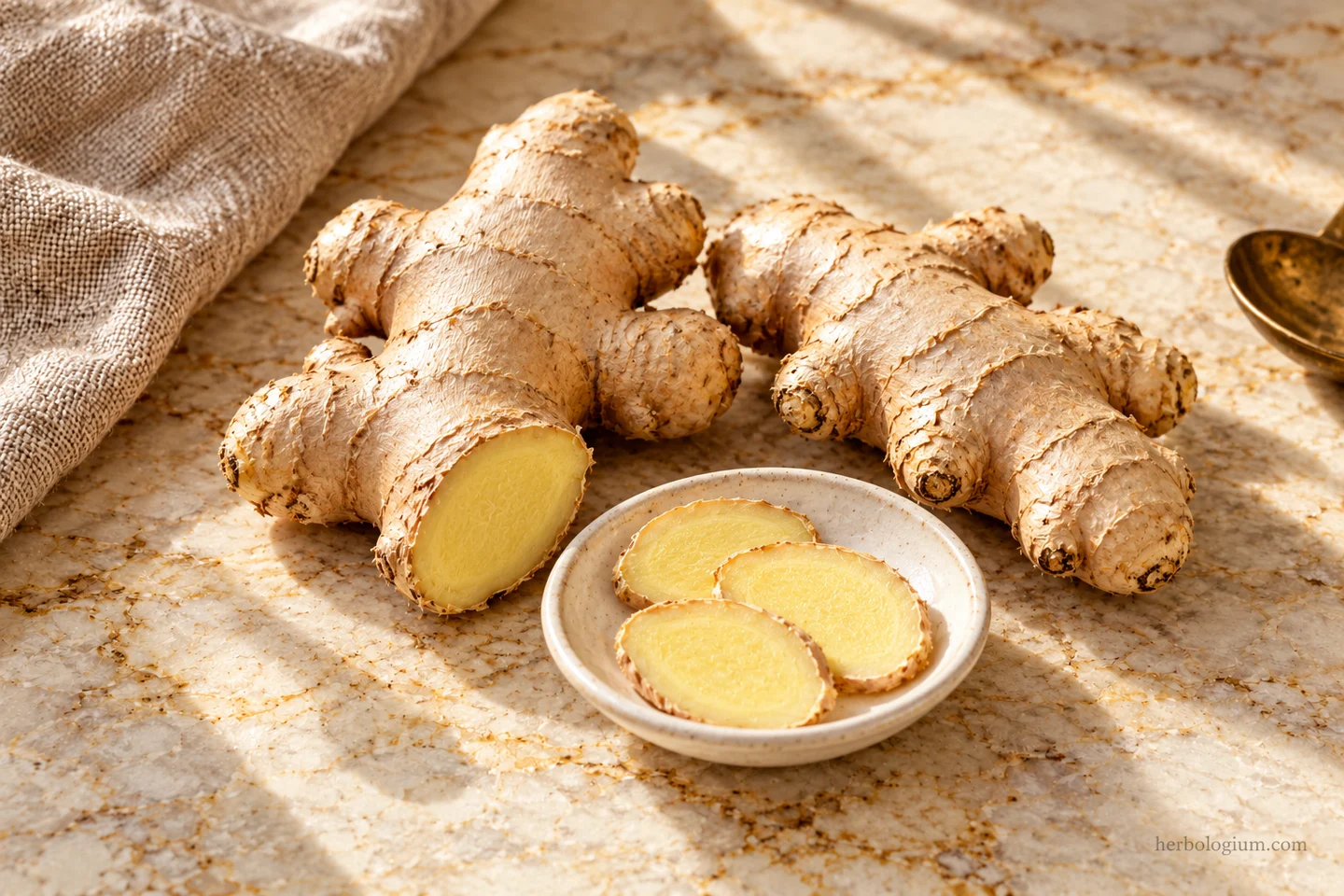
Ginger — imagined ingredient study · OpenAI image generation · Herbologium art direction · AI-generated decorative artwork. Original AI-generated ingredient illustration, made for Herbologium with Taj Mahal quartzite, flax linen and soft natural-light styling. Not a photograph, botanical identification guide, or documentation of a historical custom. The domain mark identifies the collection; no human photographer is claimed. No blanket reuse license is stated. Source: https://herbologium.com/botanical-illustrations.json
THE STORY
A V&A family trail describes a German gingerbread mould dated 1795. Made from pear wood, it carries a lamb design intended to be pressed into dough. The museum connects gingerbread with Christmas and Easter treats.1
The Victoria and Albert Museum interprets object 121:1&2-1906. Its maker is unrecorded.1
Germany is the recorded place of manufacture. The object’s date is 1795; the museum trail was updated in December 2025. Those are different kinds of dates.1
Reading this account
The mould records a material tool for giving food a recognizable image. It does not tell us who ate a particular batch, which recipe was used, or what every household believed. The botanical illustration here depicts ginger, not the mould.1
What the source leaves open. The object’s manufacture date does not date the beginning of the custom; its precise recipe is unknown.
KEEP THE FOOTNOTES
Sources behind the story
- V&A trail: Christmas — Gingerbread mould, 1795
Museum interpretation of object 121:1&2-1906. Updated December 19, 2025; consulted October 17, 2026. The object image is not reproduced.
Source-based reading · Sources consulted October 17, 2026.
Something to add or correct? Leave a note for the collection.
Your notes on this story
A connection, a question, a passage to return to. Private to this browser.