Rosemary study
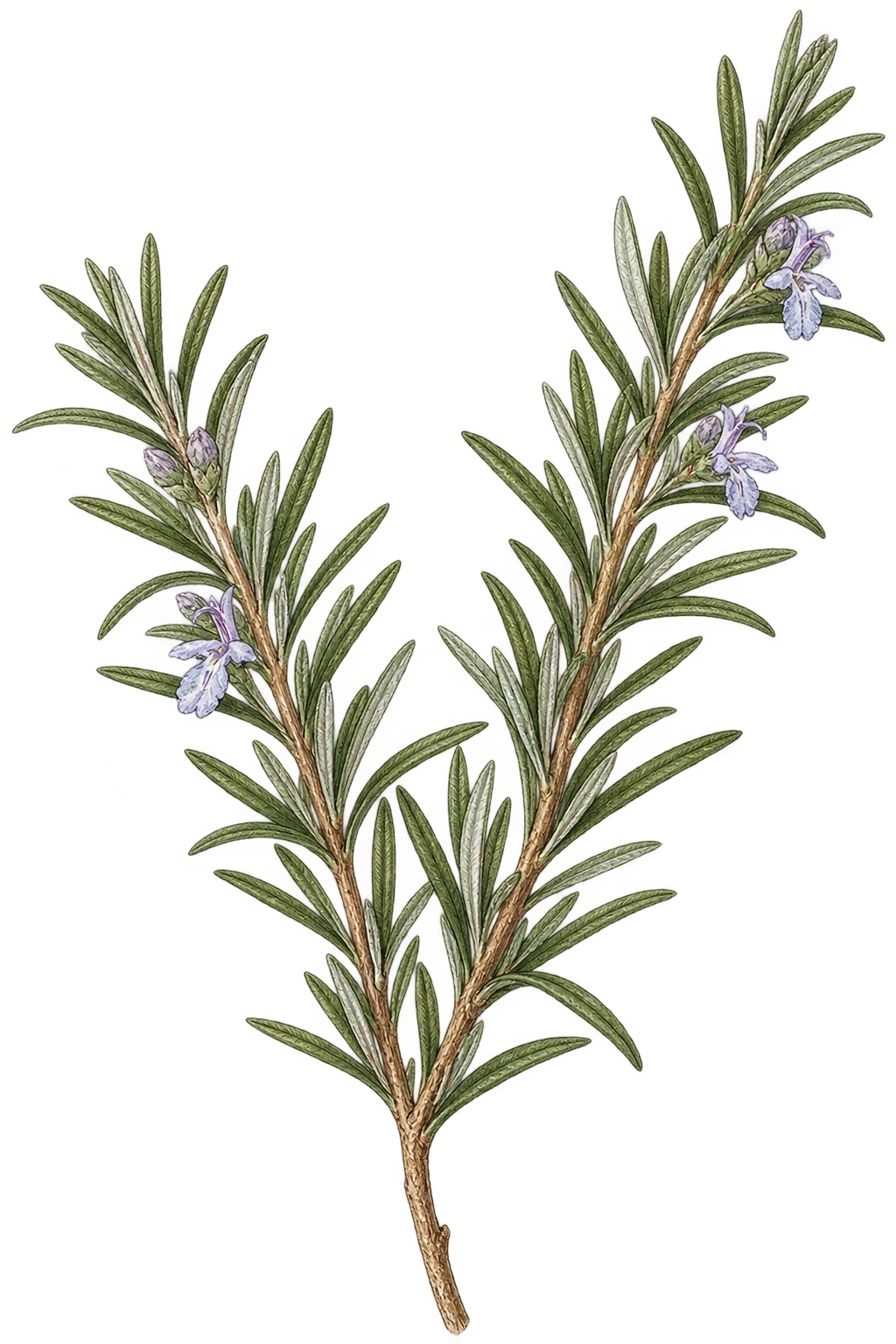
AI-generated for Herbologium · Herbologium · AI-generated decorative artwork
View the source record ↗Image source: https://herbologium.com/about#artwork · Original decorative illustration generated with OpenAI ImageGen. Not a historical plate or a plant-identification diagram.
One plant, two familiar names
Rosemary is Salvia rosmarinus, a member of the mint family, Lamiaceae. The name Rosmarinus officinalis remains familiar from older gardening books, botanical labels, and scientific papers. Kew treats it as a synonym of the accepted name. Keeping both names in the record makes those older sources easier to find without suggesting that the plant itself has changed.
Its narrow leaves can look like needles, but a closer view reveals a dark green upper surface and a paler, hairy underside. It is a woody shrub, with forms that grow upright and others that trail. Flowers vary among cultivars and may be blue, pink, or white. Those details belong to the botanical description; they do not make a photograph a sufficient identification guide for an unfamiliar plant.
Sources: Royal Botanic Gardens, Kew (n.d.) ↗ ; Mahr, Susan; University of Wisconsin–Madison Extension (2026) ↗
From a sprig to a recipe
In the kitchen, rosemary's pungent, resinous flavor gives a small amount a noticeable presence. Illinois Extension describes harvesting foliage and tender tips through the growing season and drying leaves for later use. Fresh and dried rosemary therefore belong in the same cupboard story, but a careful recipe should name the form it expects. A whole sprig, chopped leaves, and dried leaves are different instructions to a cook.
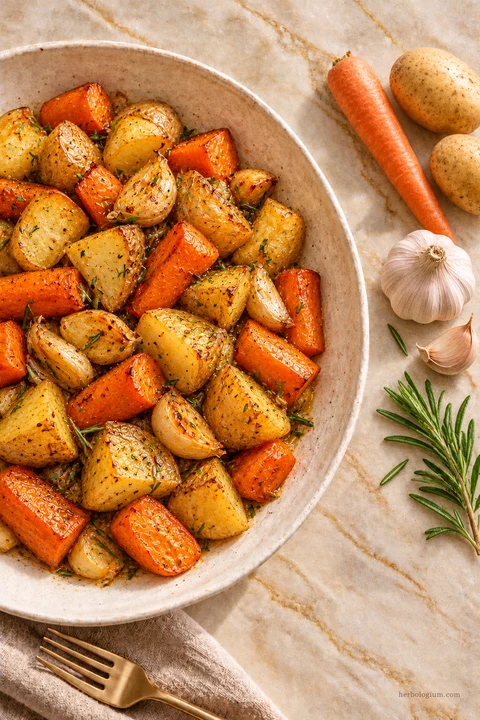
The rosemary-roasted roots card now contains a complete, independently composed editorial preparation. Its quantities and method are separate from the earlier publisher link; no human kitchen test is recorded. A source reference, a personal cooking observation and a tested recipe remain different kinds of record.
Sources: Illinois Extension (n.d.) ↗ ; Nutrition Center, University of Iowa College of Public Health (n.d.) ↗
A garden note needs a place
Extension guidance emphasizes sun and good drainage. Wisconsin's account also describes propagation from cuttings and the slower route from seed. These are useful starting observations, but a garden note needs a location as well as a plant name. Advice about bringing rosemary indoors for winter reflects the climate in which that advice was written. A grandmother's successful windowsill, a sheltered courtyard, and a cold outdoor bed leave different records of the same species.
Sources: Mahr, Susan; University of Wisconsin–Madison Extension (2026) ↗ ; Illinois Extension (n.d.) ↗
Remembrance in a literary source
In Hamlet, Act 4, scene 5, Ophelia associates rosemary with remembrance. The passage gives us a specific literary document, spoken within a scene shaped by grief. It supports a history of meaning in this work. It cannot tell us how everyone in Shakespeare's world used the herb, establish the beginning of the association, or show that eating rosemary improves memory. The literary question remains rich on its own: why does this plant make memory tangible in the scene?
Sources: William Shakespeare; Folger Shakespeare Library edition (n.d.) ↗
What the memory experiment measured
A 2012 crossover experiment tested dried rosemary and placebo in 28 older adults, measuring cognitive performance over several hours. Results depended on the amount tested: the lowest dose improved a measure of memory speed, while the highest impaired it. Other findings were less consistent. This was a small, acute experiment, not a study of dementia prevention or years of ordinary culinary use.
The result makes preparation, quantity, participants, and the chosen measurement essential parts of the evidence. It does not convert Ophelia's association into a proven remedy or supply a recommended serving. In this dossier, the literary source and the experiment answer different questions, and each keeps its own limits.
When keeping a cooking card, record which edition of the preparation you used. Ingredient amounts, substitutions and your own observations belong beside that version. A later editorial update does not turn an earlier household observation into a test of the new formula, and an illustrative serving image does not supply that missing cooking evidence.
Sources: Pengelly, A., Snow, J., Mills, S. Y., Scholey, A., Wesnes, K., & Butler, L. R. (2012) ↗
KEEP THE FOOTNOTES
Sources & further reading
Royal Botanic Gardens, Kew · n.d.
Botanical identity and nomenclature.
Mahr, Susan; University of Wisconsin–Madison Extension · 2026
Revised June 2026. Supports plant habit, leaf and flower characteristics, cultivar variation, culinary uses, drainage, and propagation. Winter advice is regional. Historical and medicinal assertions on the page are not used as independent evidence.
- 03Rosemary
Illinois Extension · n.d.
Supports pungent flavor, harvesting foliage and tender tips, drying leaves, and sun and drainage requirements. Growing and overwintering advice reflects an Illinois context.
Nutrition Center, University of Iowa College of Public Health · n.d.
Original source recipe. Herbologium retains an original editorial description, source link and plant connections; the complete preparation remains with the credited publisher.
William Shakespeare; Folger Shakespeare Library edition · n.d.
Primary literary text. The rosemary passage documents a literary association, not a medical effect.
Pengelly, A., Snow, J., Mills, S. Y., Scholey, A., Wesnes, K., & Butler, L. R. · 2012
Journal of Medicinal Food, 15(1), 10–17. Randomized, double-blind, placebo-controlled crossover study in 28 older adults. Acute cognitive measurements differed across doses: the lowest tested dose improved memory speed and the highest impaired it. Other results were less consistent. This small, short-term experiment does not establish dementia prevention, lasting benefit, or a recommended culinary amount.
Something to add or correct? Prepare a note for the collection.
Your notes on this card
What worked, what you changed, what you want to remember. Private to this browser.
BRING IT TO THE TABLE
Cook with rosemary.
All 1 connected recipe →An ingredient across tables
Find this plant in the Atlas.
These places connect through recipes or documented accounts using this plant. They do not describe its native range or place of domestication.
See these connections on the map →